Directional RF suppression
Use a directional jammer for focused coverage of selected approach sectors.

Compare Directional RF Jammer and Omni-directional RF Jammer options for fixed-site C-UAS integration, linked control and coordinated response.
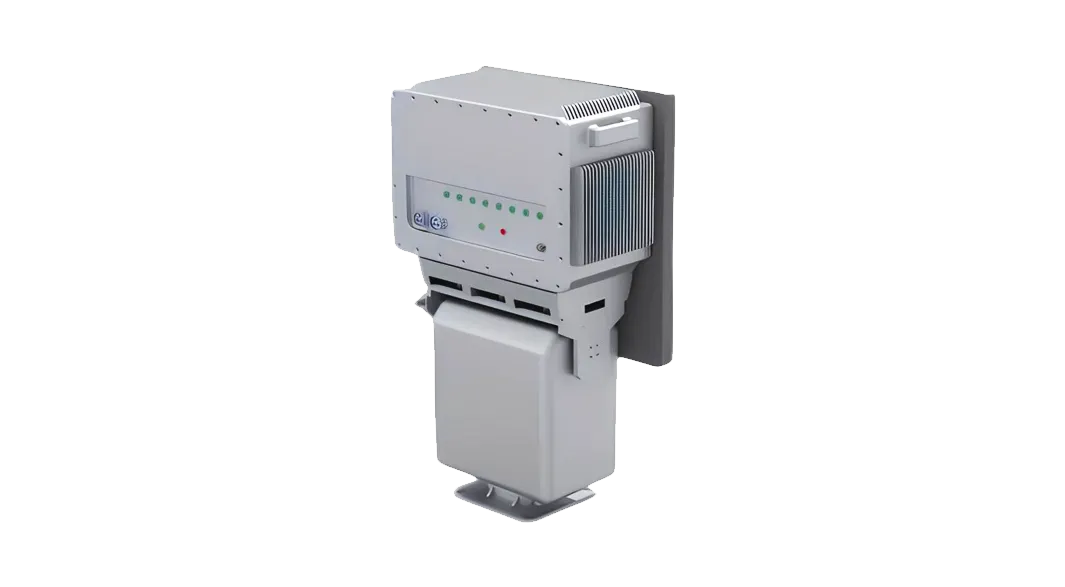
A Drone Jammer belongs downstream of detection, identification and target confirmation. Fixed RF detection provides spectrum and direction information, radar adds range, altitude, speed and continuous tracks, and EO/IR provides visible and thermal confirmation. The command platform then links the target track to a Directional RF Jammer for focused approach-sector coverage or an Omni-directional RF Jammer for 360-degree fixed-site coverage. Selection should consider protected-zone geometry, mounting, electromagnetic compatibility, nearby communications, output configuration, platform interfaces and operating mode. N-TET supports the engineering comparison, system integration, linked control and commissioning of both fixed-site jammer formats. The final design defines sensor inputs, jammer coverage geometry, command logic, device status and event records.
Use a directional jammer for focused coverage of selected approach sectors.
Use an omni-directional jammer for 360-degree fixed-site coverage.
Connect RF, radar and EO/IR confirmation to jammer control and device status.
Integrate target tracks, alarms, control commands, equipment status and event records.
Choose directional or omni-directional RF suppression by coverage geometry, mounting, nearby communications and platform interface.
A project-configured directional RF suppression layer for focused sector coverage and fixed-site integration.
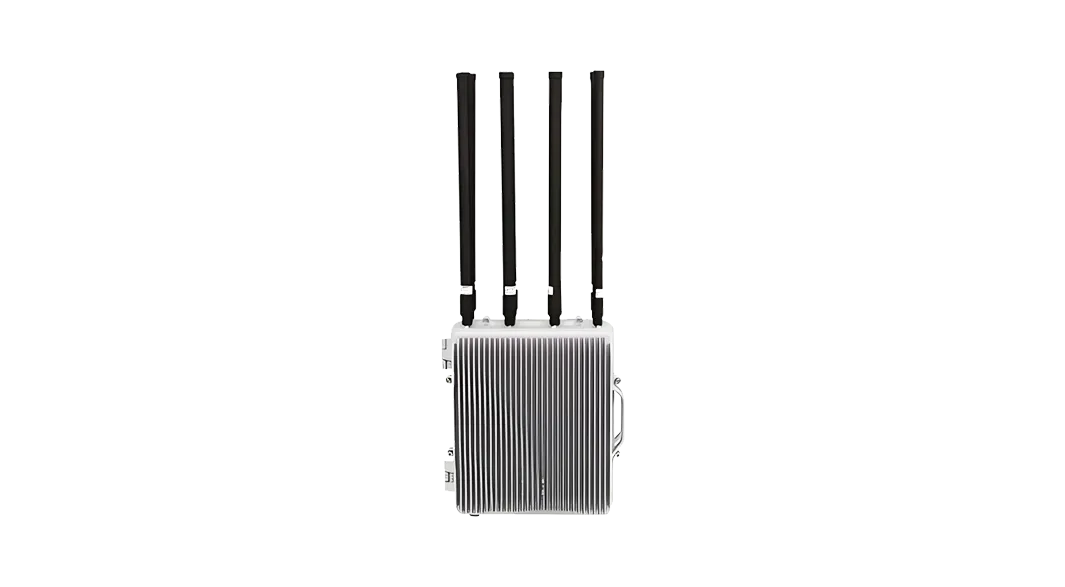
A project-configured omni-directional RF suppression layer for 360-degree fixed-site coverage.
Compare coverage geometry, installation, electromagnetic environment, command interfaces and operating mode.
| Selection factor | Directional RF Jammer | Omni-directional RF Jammer |
|---|---|---|
| Coverage concept | Focused sector or approach direction | 360-degree area around a fixed installation |
| Best fit | Sites that need directional coverage geometry | Sites that need omni-directional area coverage |
| Planning inputs | Sector drawing, aiming, mounting and exclusion zones | Area boundary, mounting, nearby systems and exclusion zones |
| Platform role | Target-track handoff, control and device status | Target-track handoff, control and device status |
The jammer remains downstream of RF and radar detection, EO/IR confirmation and command-platform correlation.
RF, radar or Remote ID sources create an observation with time and available position or track data.
The platform correlates sensor, map, identity and permitted-flight evidence while preserving uncertainty.
EO/IR and operator review establish the event status and the responsible decision-maker.
The command platform links the confirmed target to the selected directional or omni-directional jammer and records control commands, device status and outcomes.
Define escalation contacts, decision authority, site procedures and record-retention requirements before commissioning.
Both configurations begin with multi-sensor confirmation and use command-platform linkage for control and event records.
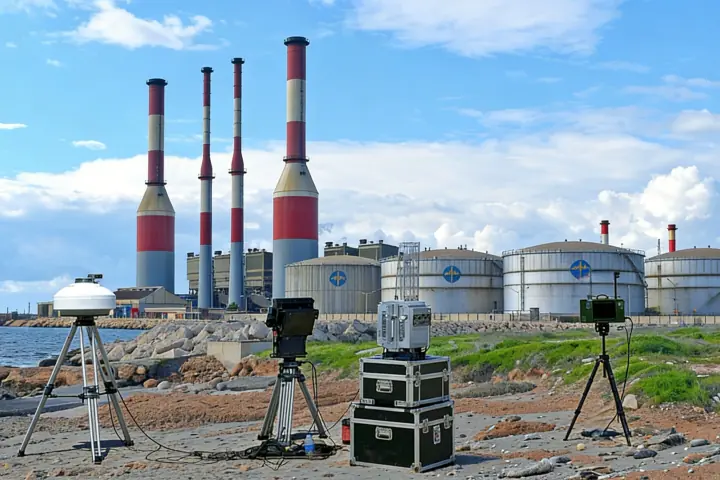
A selected approach sector uses a Directional RF Jammer downstream of fixed RF, radar and EO/IR confirmation.
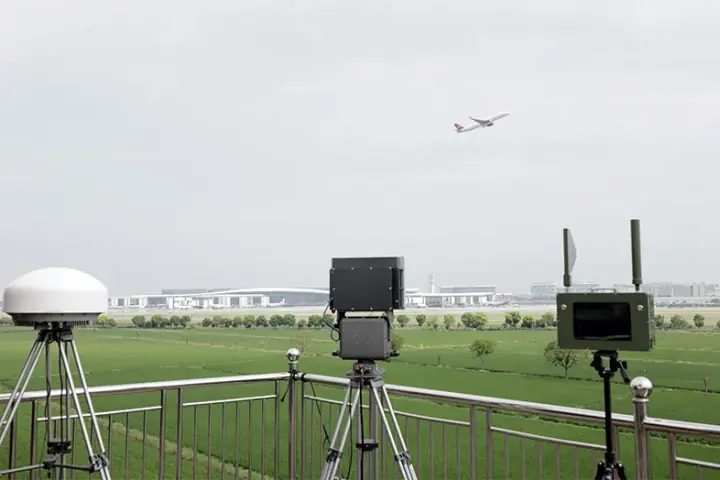
A fixed-site area uses an Omni-directional RF Jammer after reviewing mounting, surrounding systems and communications interfaces.
Compare coverage geometry, nearby communications, mounting position, aiming or area coverage, output configuration and command-platform interfaces.
Yes. The command platform can correlate RF, radar and EO/IR data, maintain the target track, issue control commands and display jammer status in one interface.
Provide the protected boundary, priority sectors, nearby communications, mounting options, power and network conditions, platform interfaces and the required operating mode.
Tell us the equipment, application or site you are reviewing. Our team can provide product information, technical documents, pricing and configuration support.
Tell us the equipment, application or site you are reviewing. Our team can provide product information, technical documents, pricing and configuration support.