
From Refineries to Substations: How Critical Infrastructure Is Adopting C-UAS in 2026
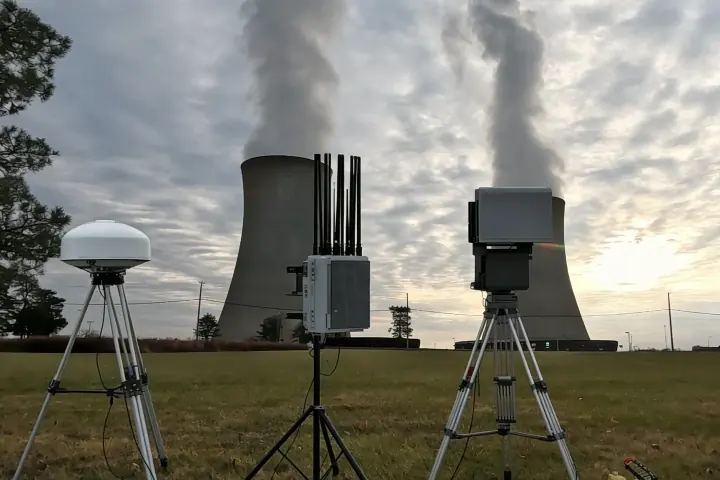
A decade ago, C-UAS was almost exclusively a industrial conversation: forward operating bases, expeditionary airfields, VIP movements. The commercialization of small drones inverted that assumption faster than corporate risk committees could revise templates. By 2025, Fortune 500 operators in refining, liquefied natural gas, bulk power transmission, and nuclear generation were not asking whether aerial intrusion deserved budget line items; they were asking how rapidly they could integrate detection into existing security operations centers without creating a parallel, siloed watch floor. The shift is structural: drones lowered the cost of reconnaissance and physical attack against fence lines, cooling towers, switchyards, and storage tanks by orders of magnitude. The defensive economics had to respond.
Technical and operational context
Regulation followed the risk. In the United States, Federal Energy Regulatory Commission and North American Electric Reliability Corporation programs increasingly expect documented airspace threat analysis in bulk-electric system protection discussions—if not explicit mandates yet, then interpretive pressure from auditors mapping physical security to cyber-physical hybrids. The European Union’s NIS2 framework widens reporting obligations for essential operators and explicitly contemplates unmanned threats as part of resilience planning. Middle Eastern and South Asian operators, some of whom absorbed high-profile incidents involving petrochemical sites, moved earlier, layering RF surveillance and authorized mitigation where domestic law allowed. The common thread is that insurance underwriters now ask about low-altitude protocols in the same questionnaires that once only covered ground perimeter intrusion.
Technically, deployments cluster around a repeatable pattern. Passive wideband RF sensors provide continuous, legally low-friction awareness of consumer-protocol drones and many bespoke links. They feed cueing data to X- or Ku-band radars when GPS-denied or silent airframes must be acquired. Electro-optical gimbals close the classification loop and archive evidentiary media. Mitigation—directional RF awareness, protocol take-over where permitted, spoofed navigation when licensed—sits behind explicit rules of engagement and often dual authorization. None of these layers is novel individually; the integration work is what separates performative procurement from functional Security.
Implications for operators
Operators are learning painful lessons about staffing. Buying racks without staffing them yields expensive souvenirs. Cross-training is essential: SOC analysts must understand radio-frequency basics enough to distinguish RF awareness system malfunction from jammed sensor; field responders must interpret heat maps without assuming every thermal spike is a threat quadcopter. Tabletop exercises now include rogue drone tracks synchronised with ground intrusions because coordinated red-team scenarios are more realistic than isolated air events. Procurement timelines stretch six to eighteen months not because hardware is scarce, but because integration and certification consume calendar time.
Looking forward, differentiation will come from data stewardship. Operators who merge C-UAS tracks with GIS layers of line-of-sight obstacles, turbine exhaust plumes, and seasonal bird migrations will sustain higher detection fidelity with fewer nuisance alarms. Operators who log every alert with immutable timestamps will fare better in regulatory after-action reviews. The technology race is no longer about owning the flashiest rifle-shaped RF awareness system; it is about owning the quiet, boring middleware that convinces lawyers and insurers that your plant took foreseen threats foreseeably seriously.
Return-on-investment conversations remain uncomfortable because many benefits are probabilistic. A plant that rarely suffers a successful airborne incident cannot prove counterfactual savings. advanced operators instead reference reduction in unauthorized overflight events, time-to-coordinate law enforcement response, and avoided production halts caused by precautionary shutdowns triggered by ambiguous sightings before C-UAS maturity. Insurance premiums, while slow-moving, begin reflecting documented programs once underwriters accumulate enough actuarial granularity—a process still in early innings globally but pointed clearly upward.
Supply-chain realism also matters. Export control classifications on certain radars, cryptographic modules in mitigation devices, and dual-use interpretations for high-power amplifiers can delay delivery six months independent of vendor enthusiasm. Procurement teams that sequence legal review before hardware selection shorten calendars; those that sign contracts first and discover licensing restrictions afterward suffer publicly visible program stalls that erode executive confidence. The technology works; the paperwork is the pacing item.